
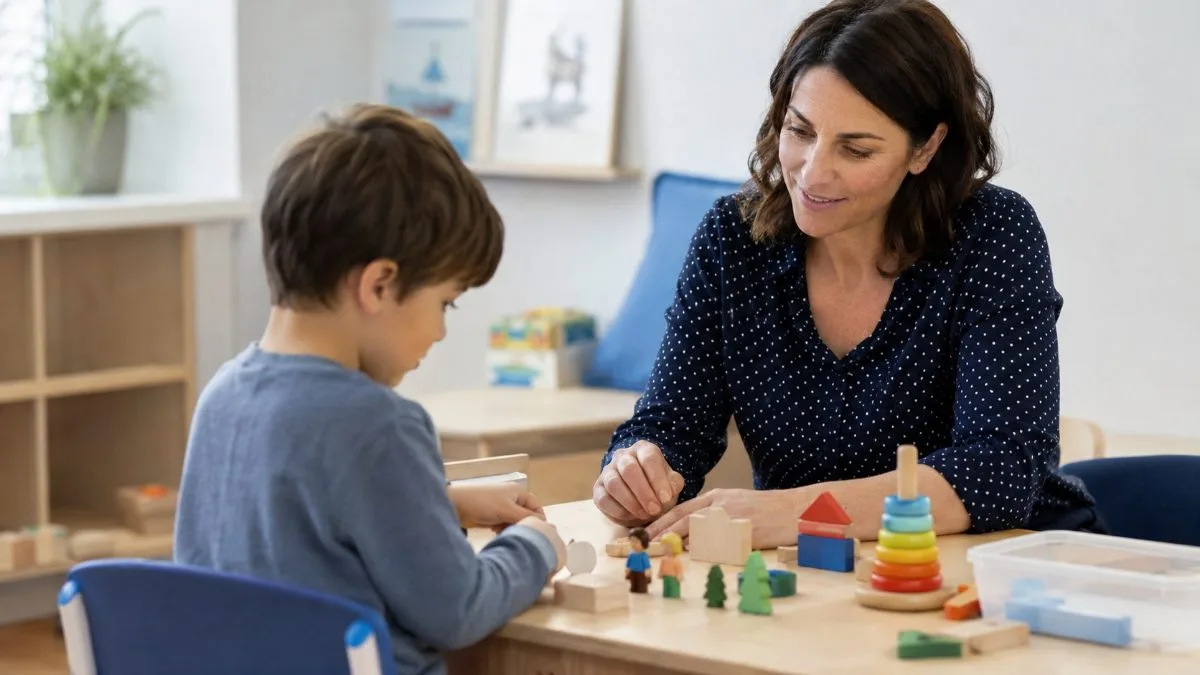
Many parents come to us with the same question, is everything all right with my child. An autism spectrum assessment is not about pinning a label on a child. It is about understanding them and surrounding them with the right support as soon as possible. Below we explain the whole process step by step, without jargon and without stress.
What is the autism spectrum?
The autism spectrum, ASD for short, is a pervasive neurodevelopmental condition that affects communication, social relationships and the way stimuli are perceived. The word spectrum captures enormous variety, because every child on the spectrum is different, has a different profile of strengths and difficulties and needs a different level of support.
Early signals worth observing
There is no single symptom that decides autism. It is the whole picture that counts. In young children, the following draw the attention of parents and specialists, among others:
- limited eye contact and less reciprocation of smiles,
- no or delayed response to their name,
- delayed speech development or its regression, we write about speech in our article on early speech development,
- less interest in shared play and in sharing attention,
- repetitive movements, strong attachment to routines, difficulty with change,
- unusual reactions to stimuli, sounds, light, textures.
Many children temporarily show one of these behaviours and develop normally. That is why it is not worth diagnosing a child from a list found online. It is worth, however, discussing your observations with a specialist.
When to come for an assessment?
The rule is simple, sooner is better than later. If something worries you, do not wait for the child to grow out of it. An early diagnosis opens the door to early support, and a young child's brain is most plastic, that is, learns fastest. A consultation settles nothing in advance, and often simply clears up doubts.
What does the diagnosis look like step by step?
At BELMED® the spectrum assessment process is orderly and carried out in a calm atmosphere. It most often involves the following stages:
- Initial consultation. A conversation about your observations and concerns, and jointly deciding how to run the process.
- Developmental interview. Getting to know the child's developmental history in detail, the structured ADI-R interview is helpful here.
- ADOS-2 clinical observation. The gold standard of observation, in which a specialist observes communication, play and relationships in a structured way, described on the ADOS-2 assessment page.
- Analysis and diagnosis. Bringing together all the information in relation to the diagnostic criteria.
- Discussion of results. A calm conversation about what the result means in practice, and a written report with recommendations.
Why do we combine ADOS-2, ADI-R and observation?
Each tool shows a different side. ADOS-2 is observation here and now, in direct contact. ADI-R and the parent interview reconstruct the developmental history that is not visible in a single meeting. Only bringing these perspectives together gives a reliable, full picture. That is why we say the gold standard of spectrum diagnosis is combining methods, not relying on a single result.
What happens after the diagnosis?
A diagnosis is not an end, but a beginning. You receive a written document and a discussion that explains the child's strengths and needs. On this basis we plan the next steps, from family psychoeducation, through therapy and support for the development of communication, to adjustments at nursery or school. A diagnosis also gives access to forms of help, for example statements and support in institutions.
For many families, a diagnosis is a moment of relief. Difficult behaviours stop being a mystery or a fault and become understandable. That makes it possible to start helping the child effectively, instead of fighting the symptoms.
Support for parents
A child's diagnosis also involves parents' emotions, from relief, through anxiety, to many questions. That is natural. Our role is not only to assess the child, but also to accompany the family, explain and point to concrete directions. At BELMED® in Tczew we assess the spectrum in children and support families through the next stages.
Do you have doubts about your child's development?
Book a consultation. We will calmly assess the situation and advise whether, and what kind of, assessment will help.
This article is for information only and does not replace a consultation or assessment. For an individual assessment, see our ADOS-2 assessment and ADI-R interview pages.