
What is ADOS-2?
ADOS-2 (Autism Diagnostic Observation Schedule, Second Edition) is a standardised observational assessment carried out to evaluate the autism spectrum. ADOS-2 alone is not a diagnosis. It is one element of the diagnostic process; the full diagnosis is made on the basis of the whole clinical picture, including the interview. It is regarded as the gold standard of observation for the autism spectrum in children and adults. It consists of five modules chosen to match the age and language level of the person being assessed.
The session usually lasts 40 to 60 minutes and takes place in a prepared setting that allows natural interaction. Afterwards we prepare a detailed report, which we discuss with the parents or carers and use to plan further support.
Certified ADOS-2 clinicians
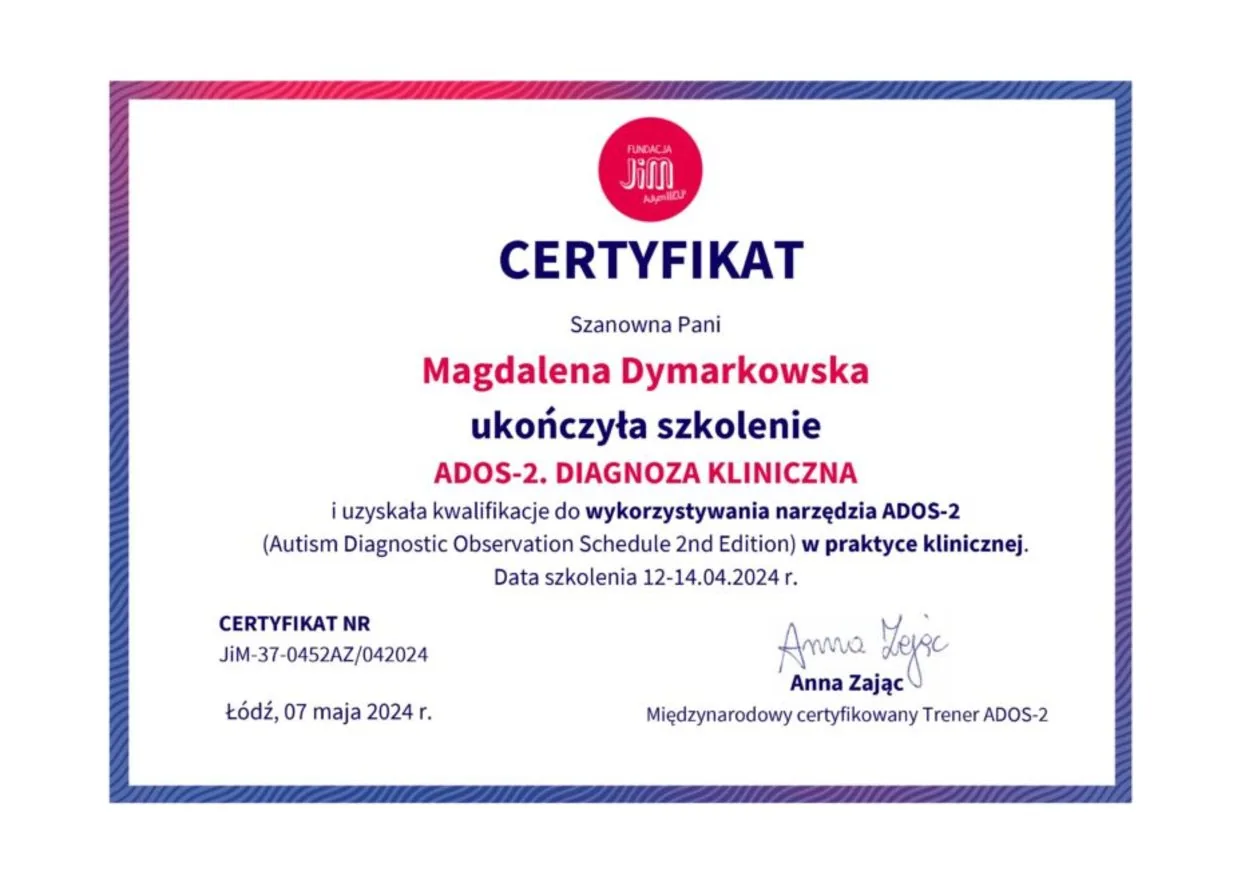
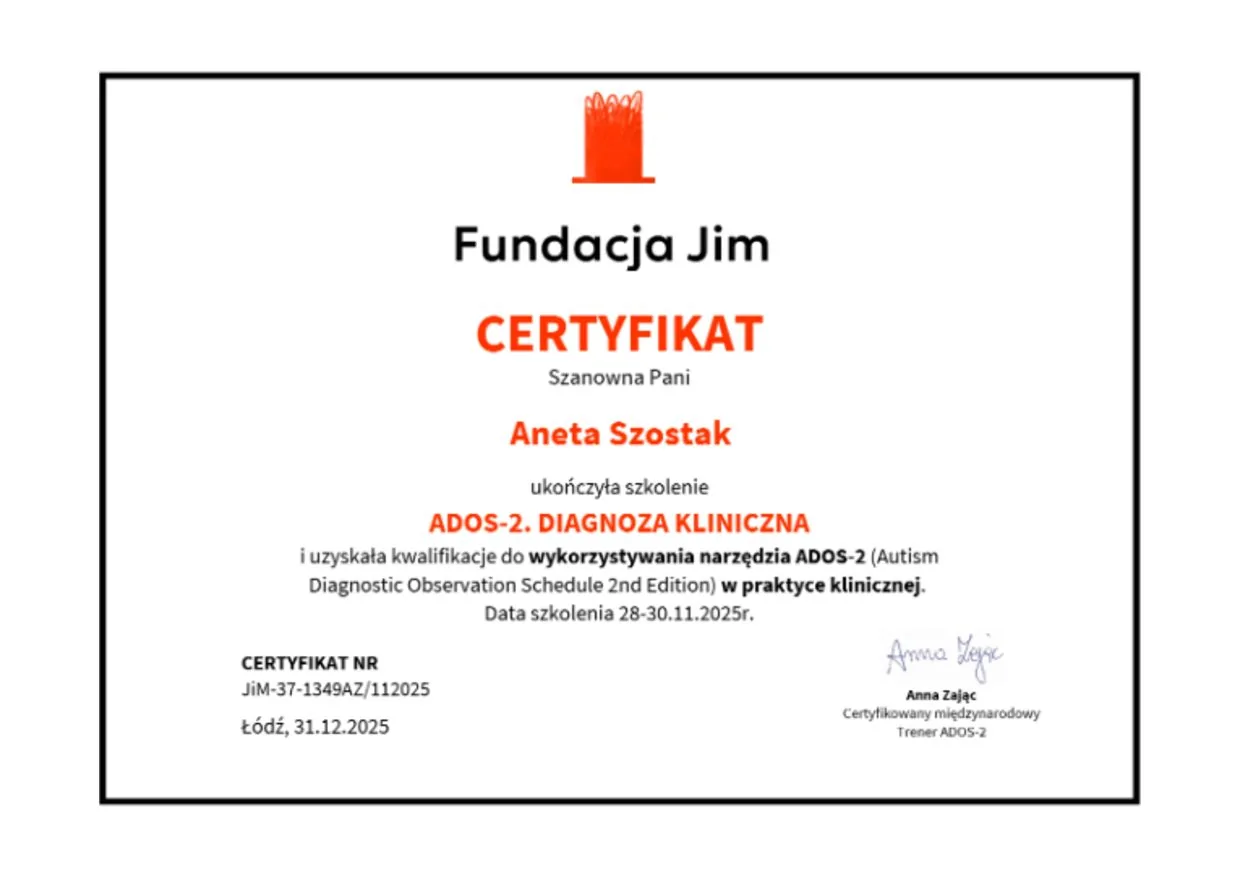
The assessment is carried out by specialists holding the "ADOS-2. Clinical Diagnosis" certificate from the JiM Foundation, which authorises use of the tool in clinical practice.
What it is
Standardised observation of behaviours key to the autism spectrum.
Who it is for
Children, adolescents and adults with suspected autism spectrum.
How it works
Interview, observation session and discussion of the report.
What do we look at during the assessment?
ADOS-2 consists of structured interactions that let us observe behaviours key to the autism spectrum across four areas:
Communication
How the person communicates: speech, gestures, facial expression and eye contact.
Social interaction
Initiating and sustaining relationships and responding to another person.
Play and imagination
Symbolic play, creativity and flexibility in activity.
Repetitive behaviours
Repetitive movements, routines and narrow, intense interests.
How does the ADOS-2 assessment work?
Calmly, in a prepared room that allows natural interaction and observation.
Interview and preparation
We learn the developmental history and choose the module suited to the person.
Observation session
Structured tasks and play. The session usually lasts 40 to 60 minutes.
Analysis and report
We code the observations and prepare a detailed written report.
Discussion and recommendations
We discuss the result with parents or carers and plan further support.
Read more on this topic
Practical articles by our specialists, related to this page. They will help you understand the assessment, therapy and next steps.



See the journey from your town and how we combine ADOS-2 and ADI-R to keep trips to a minimum.
Frequently asked questions
Can’t find your answer? Give us a call - we are happy to talk it through.
How much does the ADOS-2 assessment cost?
The assessment costs PLN 650 (promotional price until the end of 2026; PLN 700 regularly) and covers the parent interview, the observation session and a written report.
What does the assessment involve?
Up to three appointments: an interview with the parent or carer (about 60 minutes), a structured clinical observation using the ADOS-2 protocol, and a feedback session. The written report is issued within 21 working days.
Is ADOS-2 already an autism diagnosis?
No. ADOS-2 is a standardised observational assessment - considered the gold standard in evaluating the autism spectrum - but it is one element of the diagnostic process, alongside the developmental history and a functional assessment.
Will the result be accepted by schools and doctors?
Yes. We work with certified tools, and our reports are recognised by psychological and educational counselling centres and medical specialists in Poland.
Have questions?
Book a consultation.
We will answer all your questions and help you choose the right path for assessment or therapy.
We call back within 1 business day