
How do we assess for ADHD?
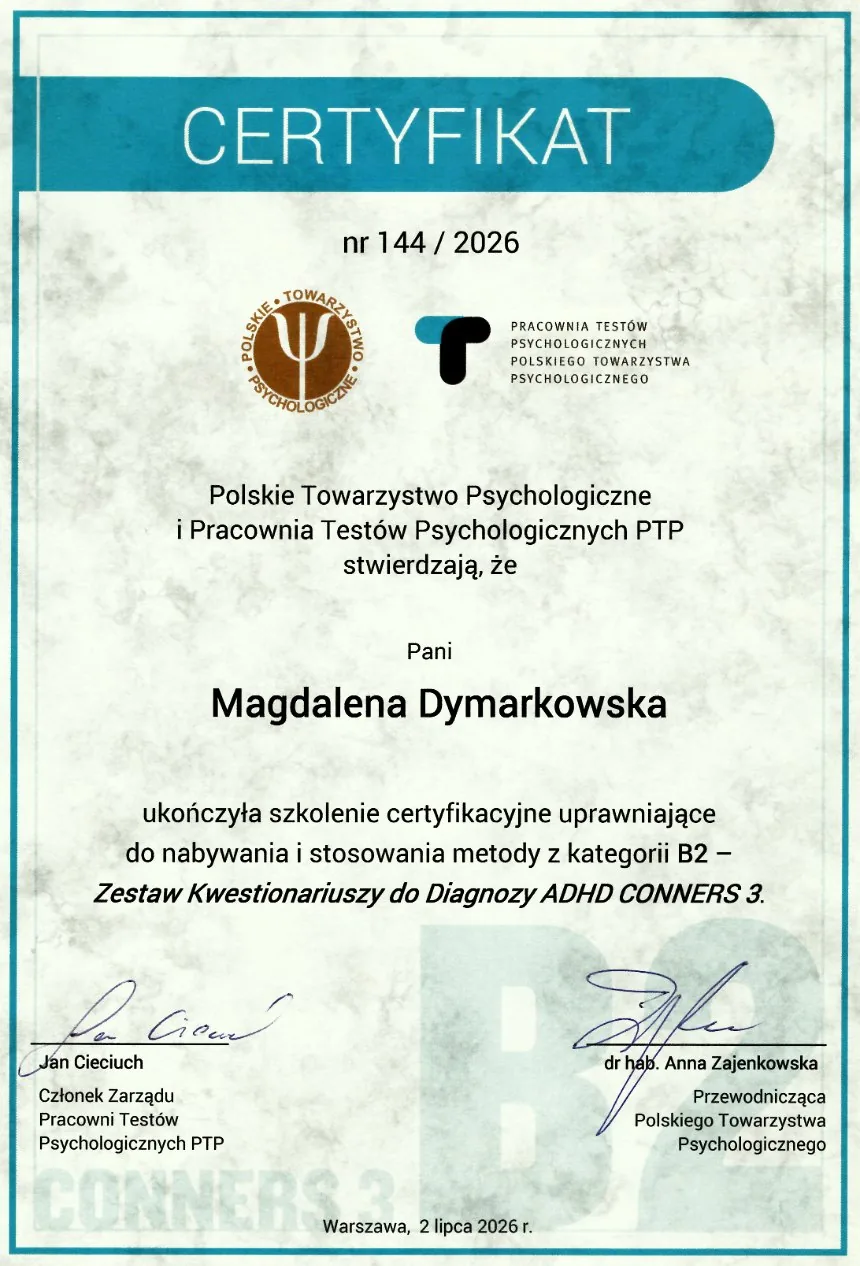
We base the ADHD assessment on several sources of information. We use the standardised Conners 3 test, clinical observation and an interview about functioning at home, at school and in relationships.
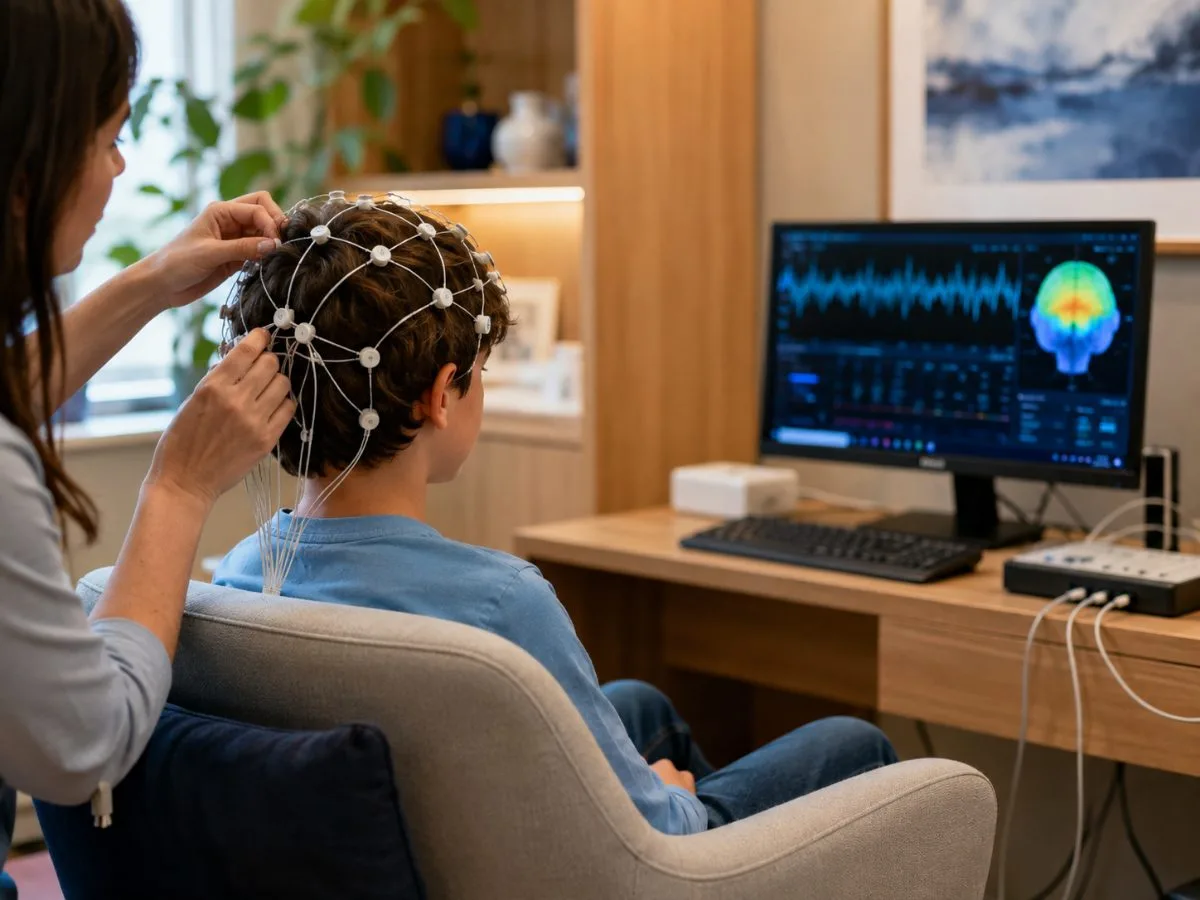
We combine the assessment with EEG Biofeedback, which maps brain activity, giving a fuller and more objective picture. The assessment itself is not a diagnosis, but an element of the diagnostic process. We finish with a written report and a meeting where we discuss the results and next steps.
What it is
Assessment of attention, impulsivity and activity across many contexts.
Who it is for
Children, adolescents and adults with suspected ADHD.
How it works
Interview, tests and a discussion of results with recommendations.
Four sessions, a full picture of functioning
The assessment takes place across up to four sessions. Each stage adds an important piece, letting us combine psychological mechanisms with neurophysiological ones.
Interview and observation
A detailed interview with a parent about the developmental history, plus observation of the child in situations that require focus.
Conners 3® test
A standardised tool with parent, teacher and self-report versions. We compare the result against norms.
EEG Biofeedback
An assessment of the brain's bioelectrical activity that reveals patterns typical of ADHD and points to areas for support.
Psychological opinion
A written summary of the results with individual recommendations and a plan for next steps.
Read more on this topic
Practical articles by our specialists, related to this page.



See the journey from your town and how we combine the stages to keep trips to a minimum.
Frequently asked questions
Can’t find your answer? Give us a call - we are happy to talk it through.
How much does the ADHD assessment cost?
The assessment costs PLN 600 and covers the clinical interview, observation and a written report.
Which tools do you use?
We work with standardised, certified instruments - in ADHD assessment these include the Conners 3 questionnaires, combined with a clinical interview and observation.
Is this for children or adults?
We assess both children and adolescents and adults. The scope and tools are matched to the person’s age.
Will I get documentation for school or a doctor?
Yes - a written report (within 21 working days), recognised by counselling centres and medical specialists.
Have questions?
Book a consultation.
We will answer all your questions and help you choose the right path for assessment or therapy.
We call back within 1 business day